
Did you know? |
Can a digitizer be used as an oscilloscope? Read more...
Latest Oscilloscope News |
New CAN FD and FlexRay Trigger and Decode Options
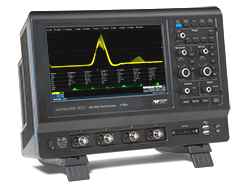 28 July 2015 – Teledyne LeCroy introduced two new trigger and decode options for the WaveSurfer 3000 oscilloscope: CAN FD and FlexRay. The addition of CAN FD and FlexRay trigger and decode capabilities to the WaveSurfer 3000 protocol analyzer capabilities provides all the tools needed to analyze and debug automotive systems using the CAN FD and/or FlexRay serial data communication standards.
Probe Adapters for Third-Party Probes and Current Sensors
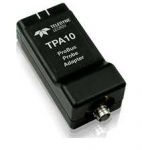 22 July 015 – Teledyne LeCroy introduced two new products that provide simple and easy interface of third-party probes and current measurement devices to Teledyne LeCroy oscilloscopes. The first - the TPA10 TekProbe- adapts a wide variety of Tektronix voltage and current probes and the second - the CA10 Current Sensor Adapter - adapts a wide variety of third-party current measurement devices. Both adapters attach to the Teledyne LeCroy ProBus probe interface, a standard probe interface for 20+ years that is present on the vast majority of oscilloscopes shipped by Teledyne LeCroy.
Teledyne LeCroy launched 2kV and 8kV High Voltage Differential Probes
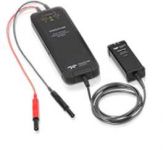 15 July 2015 – Teledyne LeCroy introduced two new additions to the HVD3000 series of high voltage differential probes - the 2 kV safety-rated HVD3206 and the 8.4 kV safety-rated HVD3605. Like the existing 1 kV safety-rated HVD310x probes, these new probes provide excellent performance by offering the best gain accuracy, widest differential voltage range, high offset range and exceptional common-mode rejection ratio (CMRR).
Compliance Test Application for MGBASE-T Networking
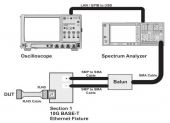 10 July 2015 – Keysight Technologies introduced the industry’s first compliance test application for systems using MGBASE-T networking applications. The Keysight U7236A and U7236B 10GBASE-T and MGBASE-T test applications help network design engineers turn-on and debug MGBASE-T Ethernet networking systems faster. This is accomplished by automating the execution of physical-layer tests on Keysight Infiniium 9000, S-Series, 90000A, V-Series, 90000 X-, 90000 Q- and Z-Series oscilloscopes with up to 63 GHz bandwidth.
PicoScope enhances Protocol Analysis of its USB Oscilloscopes
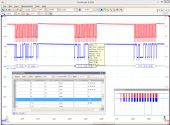
29 June 2015 - In response to the proliferation of serial bus communications in electronic designs, the latest version of PicoScope now has decoding and analysis of sixteen protocols included as standard. When used with the deep memory included in most PicoScope oscilloscopes, this new software release creates an extremely powerful debugging and troubleshooting tool at no extra cost to PicoScope owners.
USB Oscilloscopes - Product Overview (High-end)
 In addition to our product overview of low-end USB oscilloscopes this overviews looks at products with a minimum bandwidth of 500MHz. Compared to the low-end segment only a few products and manufacturers are left. Some of the listed USB PC scopes offer additional features such as arbitrary waveform generator (AWG), FFT or spectrum analyzer.
PXI/PXIe Oscilloscopes - Product Overview
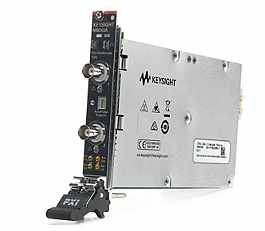 Oscilloscopes are available in different formfactors also without display. A popular formfactor for multi-instrment systems is PXI (PCI eXtensions for Instrumentation). This modular instrumentation platform originally introduced in 1997 by National Instruments and is meanwhile promoted by the PXI Systems Alliance (PXISA). PXIe (PXI Express) increases the available system data rate to now 24 GByte/s in each direction and also allows hybrid slots (PXI and PXI Express modules).
- MIPI C-PHY Transmitter Characterization and Debugging Solution
- Analysis and Characterization Support for HDMI Receiver Testing
- CAN FD Triggering and Decode Option for Keysight Oscilloscopes
- BitScope: Prototyping Board and multi-channel Solution
- Keysight extends Duration of Instrument Service
- Decoding of 8b/10b Buses with Oscilloscope
- TiePie releases new Version of Cross-platform SDK
Page 60 of 78
Oscilloscope Basics |
Oscilloscope Probes – Vital Link in the Measurement Chain
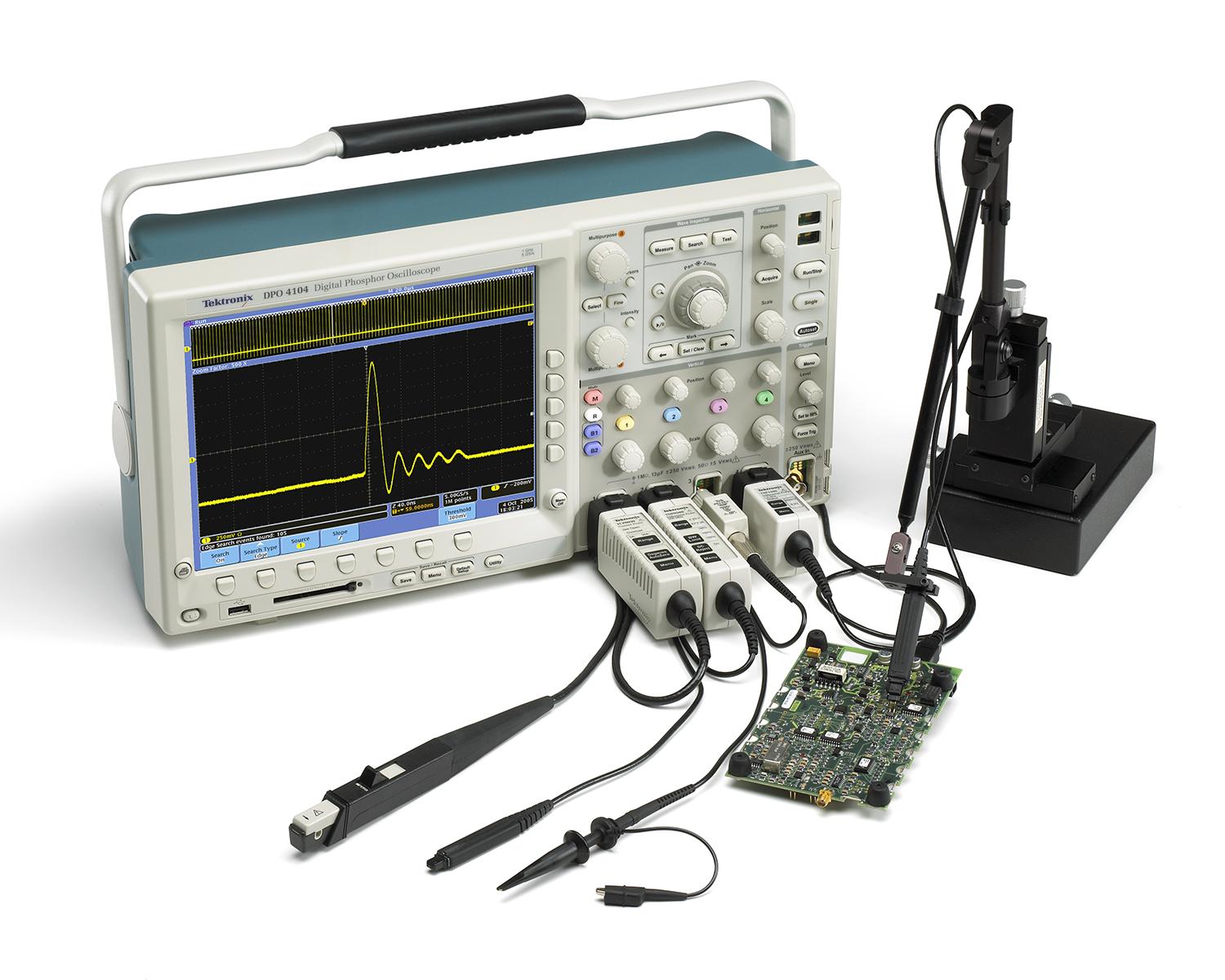 Signal measurement results can only be as accurate as the test and measurement tools in use. As clock rates and edge speeds of today’s electronic circuits increase, probing becomes a critical piece of the measurement system – the component that comes in direct contact with your circuit. This article looks at voltage probing considerations for embedded system and digital design debugging applications.
Oscilloscope Background |
A simple method to verify the bandwidth of your probe
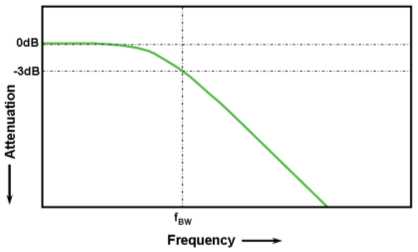 In oscilloscopes or oscilloscope probes, bandwidth is a measure of the width of a range of frequencies measured in Hertz. Specifically, bandwidth is specified as the frequency at which a sinusoidal input signal is attenuated to 70.7 percent of its original amplitude, also known as the -3 dB point. Most oscilloscope companies design the scope/probe response to be as flat as possible throughout its specified frequency range, and most customers simply rely on the specified bandwidth of the oscilloscope or oscilloscope probes, wondering if they are indeed getting the bandwidth performance at the probe tip. Now you can use these step-by-step instructions to simply measure and verify the bandwidth of your probe with an oscilloscope you may already have.