
Did you know? |
Can a digitizer be used as an oscilloscope? Read more...
Latest Oscilloscope News |
Oscilloscope History and Milestones
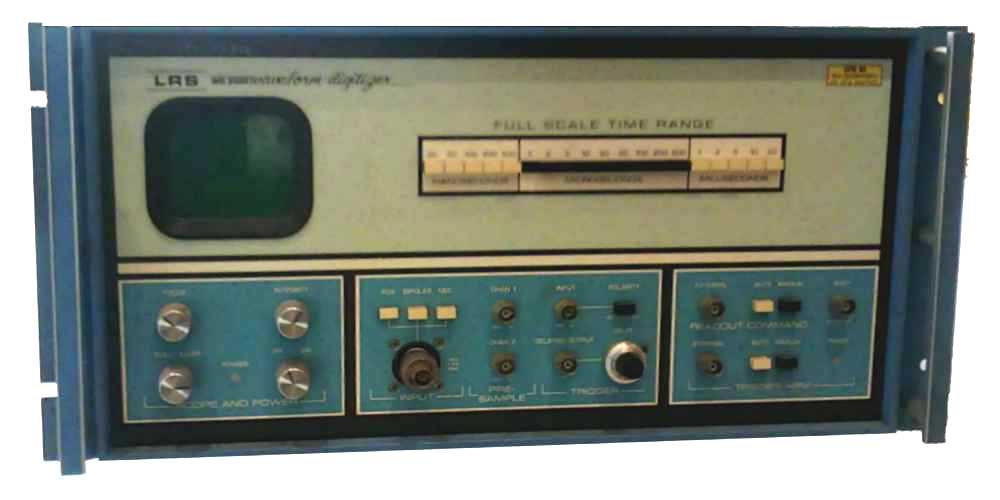 Oscilloscopes have been invented in the 1920s. Up to now this instrument encountered many innovations. In the beginning the most important manufacturers have been General Radio, DuMont, General Electric and Radio Corporation of America. Later Cossor and later Solartron dominated the market. Today the main players are Keysight, Tektronix and Teledyne LeCroy. Below we listed some important oscilloscope milestones.
Electrical Performance and Characterization Test Software for eDP 1.4
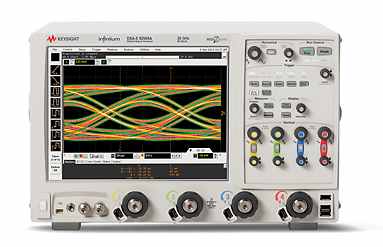 22 December 2014 – Keysight Technologies introduced test support for the eDP 1.4 (embedded DisplayPort) specification. Keysight N6469A eDP 1.4 electrical performance and characterization test software eliminates the need to tailor a test process for eDP designs. The test software operates on Keysight’s 90000 X-, 90000 Q- and Z-Series Infiniium real-time oscilloscopes with bandwidths of 13 GHz and higher. Access to the test signals through an eDP test fixture is required.
Rohde & Schwarz adds 200 MHz Oscilloscope for Education Sector
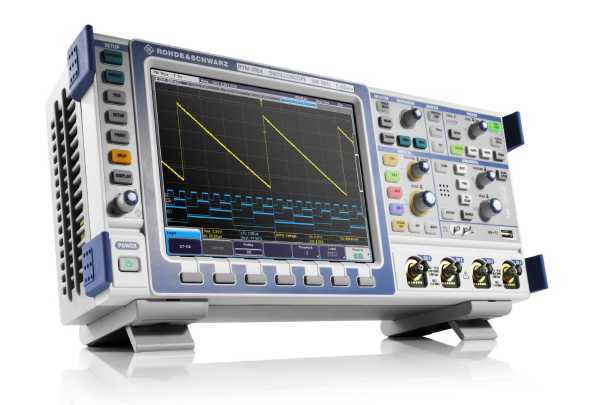 19 December 2014 - Rohde & Schwarz is expanding its R&S RTM bench oscilloscope family by a new model that is ideal for the education sector. The instrument features a 200 MHz bandwidth and an education mode that deactivates special measurement tools to help students quickly learn how to work with an oscilloscope. Also a new digital voltmeter and frequency counter option is offered.
Oscilloscope Probe Adapter for BitScope Micro
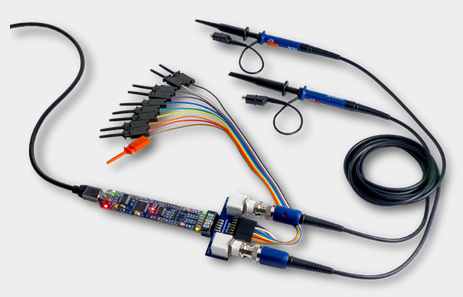 17 December 2014 - The new BitScope Micro Port 01 (MP01) is a universal mixed signal I/O adapter for BitScope Micro. It connects standard oscilloscope probes to the BitScope Micro Mixed Signal Oscilloscope. Any passive probe with 1:1, 10:1 or other attenuation ratios can be used. It supports active differential, current or any other type of probe which is BNC terminated and designed for a standard oscilloscope.
Rohde & Schwarz Oscilloscopes support high-speed CAN FD Interface Protocol Analysis
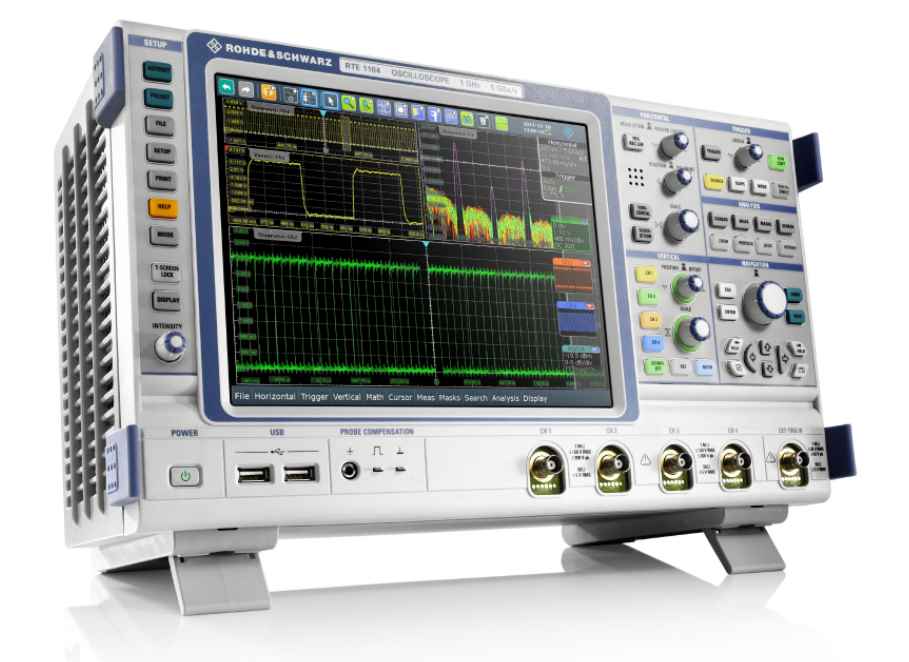 15 December 2014 - Rohde & Schwarz offers an a new protocol analysis solutions for its R&S RTE and R&S RTO oscilloscopes. The new option enables design engineers to analyze CAN interfaces that support the high-speed CAN FD (flexible data) bus protocol. These interfaces are seeing increased use in automotive and industry applications due to rising data rate requirements.
Teledyne LeCroy extends WaveSurfer 3000 Oscilloscopes with 750 MHz Model
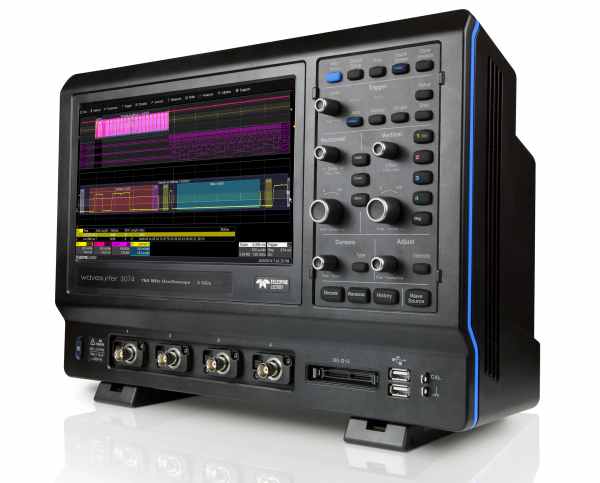 11 December 2014 – Teledyne LeCroy introduced the WaveSurfer 3074, extending the bandwidth range of the popular WaveSurfer 3000 series of oscilloscopes to 750 MHz. WaveSurfer 3000 oscilloscopes feature the MAUI advanced user interface, previously available only on higher-end oscilloscopes. Starting at 200 MHz and now reaching 750 MHz, the WaveSurfer 3000 oscilloscopes features a large 10.1” touch screen, 10 Mpts/channel memory and up to 4 GS/s sample rate.
More than just an oridnary Scope
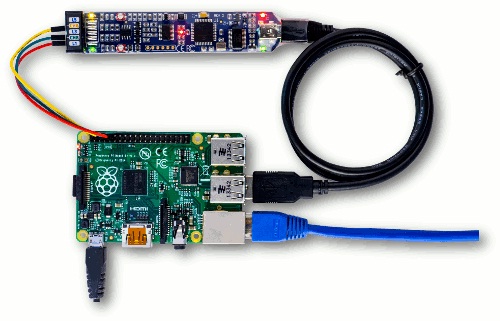 Are you looking for something special? There are some instruments available on the market that offer many additional functions or unique features conventional oscilloscopes do not have. Examples are oscilloscopes with 8 or 80 channels, 16 bit resolution (conventional scopes have only 8 bit), a mini USB scope with function generator, spectrum, logic and protocol analyzer weighing just 12 grams, a combination of oscilloscope and power analyzer or a scope integrating 5 other instruments.
- PicoScope breaks the 100,000 waveforms per second barrier!
- Test, Debug and Analysis Tools for the entire DDR Design Cycle
- Rigol releases Software for Testing Switching Power Supplies
- New Measurement and Graphing Capabilities for CAN FD Analysis
- Transmitter Testing Solution for USB 3.1
- Reconfigurable 8 Channel Oscilloscope with 14-bit Resolution
- Rigol introduces new 50MHz Economy Digital Oscilloscope
Page 68 of 78
Oscilloscope Basics |
Oscilloscope Probes – Vital Link in the Measurement Chain
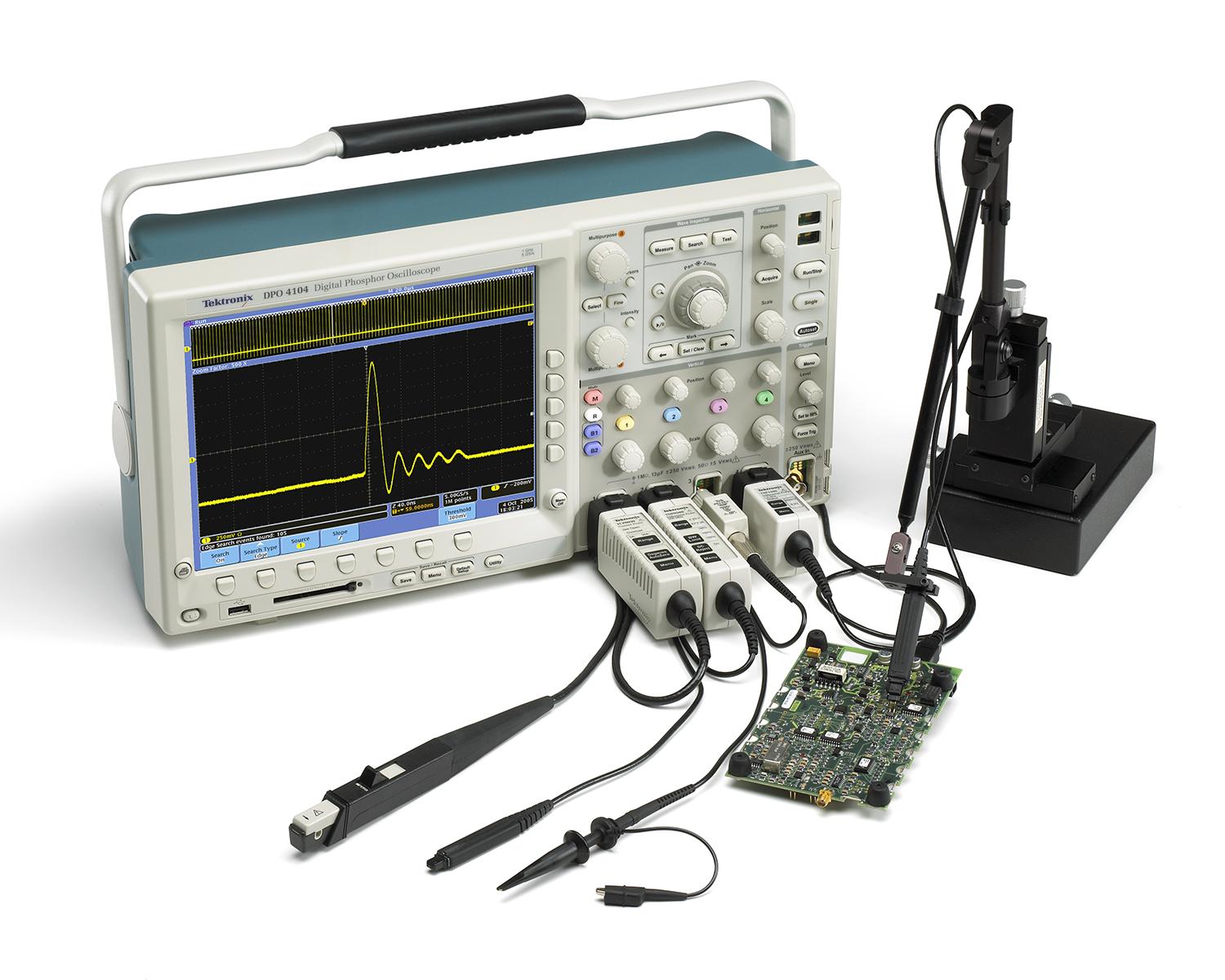 Signal measurement results can only be as accurate as the test and measurement tools in use. As clock rates and edge speeds of today’s electronic circuits increase, probing becomes a critical piece of the measurement system – the component that comes in direct contact with your circuit. This article looks at voltage probing considerations for embedded system and digital design debugging applications.
Oscilloscope Background |
A simple method to verify the bandwidth of your probe
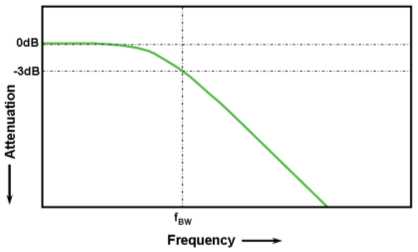 In oscilloscopes or oscilloscope probes, bandwidth is a measure of the width of a range of frequencies measured in Hertz. Specifically, bandwidth is specified as the frequency at which a sinusoidal input signal is attenuated to 70.7 percent of its original amplitude, also known as the -3 dB point. Most oscilloscope companies design the scope/probe response to be as flat as possible throughout its specified frequency range, and most customers simply rely on the specified bandwidth of the oscilloscope or oscilloscope probes, wondering if they are indeed getting the bandwidth performance at the probe tip. Now you can use these step-by-step instructions to simply measure and verify the bandwidth of your probe with an oscilloscope you may already have.